GPT Image 2.5 Could Be the Next Big Step for AI Image Creation
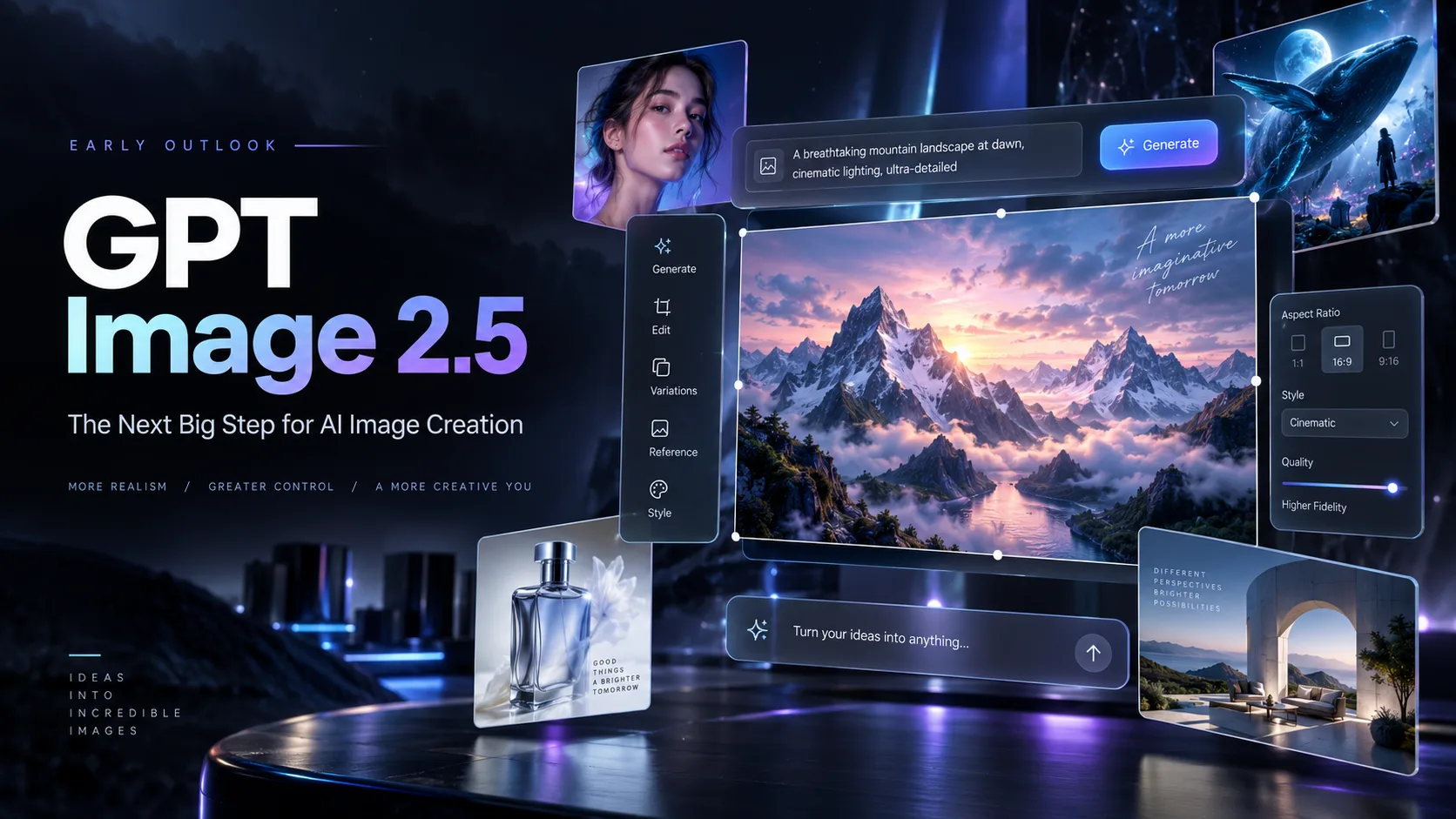
AI image generation is entering a new stage.
For the past few years, the biggest question was whether an AI model could turn a sentence into a convincing image. In 2026, that is no longer enough. Creators now expect AI image tools to understand complex instructions, preserve important details during edits, render text correctly, work with reference images, and produce assets that can actually be used in professional projects.
That is why interest around GPT Image 2.5 is growing.
The name has not yet been officially announced by OpenAI, and there is currently no public GPT Image 2.5 API or confirmed specification. Recent anonymous image-model testing, however, has created speculation that a new generation of GPT-based image technology may be under evaluation.
If that speculation turns into a real product release, GPT Image 2.5 could be more important for everyday creators than a simple increase in image quality.
The bigger opportunity is a better creative workflow.
Users interested in following the rollout can visit gptimage-2-5.com, where a dedicated GPT Image 2.5 experience is being prepared so creators can follow the model and get an opportunity to try the next-generation workflow as soon as access becomes available.
AI Image Generation Is Becoming an Editing Workflow
The first generation of text-to-image tools was largely based around experimentation.
You wrote a prompt, generated four images, picked the best one, and tried again if something looked wrong.
That approach works well for concept art and casual experimentation, but it becomes frustrating when the image needs to satisfy a specific business or creative requirement.
Imagine creating a product advertisement.
You might need the model to:
- Place the product in an exact position
- Preserve the shape and branding of the product
- Generate readable promotional text
- Match a reference photography style
- Change only the background in a later edit
- Produce several aspect ratios
- Maintain the same subject across multiple variations
A visually impressive first generation is only the beginning.
The real test is whether the AI can continue working on the same asset without forcing the creator to restart every time something changes.
This is one reason a future GPT Image upgrade could matter so much.
GPT Image 2.5 May Focus More on Control Than Surprise
Generative AI has traditionally been optimized for creating something impressive.
Professional creative software is optimized for creating something specific.
Those are different goals.
A designer does not necessarily want the AI to surprise them every time they click Generate. Once the general direction is approved, they want control.
If GPT Image 2.5 continues the direction established by previous GPT Image models, one of its most valuable improvements could be stronger adherence to precise instructions.
For example:
Keep everything exactly the same, but replace the headline with "Summer Starts Here."
That sounds simple, but it is a difficult generative-image task.
An ideal model would change the requested text while preserving the people, camera position, lighting, clothing, background, product placement, and overall composition.
The closer AI image generation gets to this level of selective editing, the more useful it becomes for actual design work.
For creators who want to test these kinds of workflows early, GPT Image 2.5 is worth watching. The platform is being built around accessible text-to-image and image-to-image creation, with the goal of making new GPT Image capabilities available to users quickly when the next model becomes accessible.
Five Workflows That Could Benefit From GPT Image 2.5
Instead of thinking about GPT Image 2.5 only as another image generator, it is more useful to think about the workflows a next-generation model could improve.
1. Advertising and Marketing Graphics
Advertising images combine several difficult problems at once.
They often require photorealistic subjects, accurate products, clean typography, deliberate composition, and enough empty space for additional design elements.
Traditional image generators can create beautiful advertising-style images, but they often struggle when the user asks for exact copy or precise revisions.
A more controllable GPT Image model could make it possible to create an initial campaign concept and then refine it conversationally.
For example:
"Make the headline smaller."
"Move the bottle closer to the center."
"Change the background from blue to warm gray."
"Keep everything else unchanged."
This type of workflow feels much closer to collaborating with a visual designer than repeatedly generating unrelated images.
2. Ecommerce Product Photography
AI-generated product photography is another area with enormous potential.
A seller might have one clean photo of a product but need dozens of additional visuals for advertisements, landing pages, social media, seasonal campaigns, and marketplace listings.
Reference-based generation can make that process dramatically faster.
The challenge is identity preservation.
A product cannot suddenly gain a different number of buttons, change its logo, alter its proportions, or lose a distinctive design detail.
Future image models will therefore be judged not only by how attractive the output looks but also by how faithfully they preserve the source product.
If GPT Image 2.5 improves reference-image consistency, ecommerce could become one of its strongest practical use cases.
3. Posters, Thumbnails, and Social Content
Text inside generated images used to be one of the easiest ways to identify AI-generated artwork.
Letters would merge together. Words would be misspelled. Decorative typography might look convincing from a distance but become meaningless when viewed closely.
That has improved dramatically, and the next step is not simply readable text.
Creators need usable typography.
A YouTube thumbnail might require exactly three words in a specific area. A movie poster might contain a title, subtitle, date, and names. A promotional graphic might require a price, discount percentage, product name, and call to action.
Better text fidelity could make AI image generation far more useful for content teams that currently generate the visual with AI and then rebuild all of the typography manually.
4. Character and Brand Consistency
Generating one good character is relatively easy.
Generating the same recognizable character across ten scenes is much harder.
This limitation affects illustrated stories, game concepts, marketing mascots, virtual influencers, comics, storyboards, and brand campaigns.
Reference images provide a partial solution, but consistency can still degrade when clothing, pose, camera angle, environment, or lighting changes.
A stronger reference system could allow users to provide several images describing different aspects of the desired result.
One reference could define a person's identity.
Another could define clothing.
Another could define a product.
Another could provide composition.
Another could establish visual style.
The model would then need to understand which characteristics belong to which reference rather than blending everything together.
That kind of multi-reference reasoning may become one of the most important competitive features in future AI image generators.
5. Iterative Image-to-Image Editing
Image-to-image generation may ultimately become more important than pure text-to-image generation.
Why?
Because most professional creative work starts with something that already exists.
It could be a photograph, a product render, a logo, a previous AI generation, a sketch, a UI mockup, or a rough advertising concept.
The user does not always want a new image.
They want a controlled transformation.
That might mean changing the weather in a photograph, replacing an object, extending a scene, modifying an outfit, redesigning a room, correcting text, or adapting a horizontal composition into a vertical format.
The model that can perform these edits reliably will often be more useful than the model that simply wins a one-shot image-quality comparison.
Why High Resolution Matters More Now
Resolution is also becoming more important as AI-generated imagery moves into production.
A small image may look excellent on a phone screen while revealing obvious weaknesses when used as a website hero banner or viewed on a high-resolution display.
Tiny typography, fabric textures, hair, product labels, reflections, architecture, and facial detail all become more demanding at larger sizes.
This is why creators are increasingly interested in high-resolution and potentially 4K-oriented AI image workflows.
There is no confirmed official GPT Image 2.5 resolution specification yet, so it would be premature to claim that a particular native resolution is guaranteed.
But higher-quality output is an obvious direction for the category.
The ideal workflow would reduce the need to generate an image and then send it through a completely separate enhancement or upscaling pipeline before it becomes usable.
The Real Competition Is Moving Beyond Image Quality
AI image benchmarks often focus heavily on which model produces the best-looking result.
That comparison will remain important, but it tells only part of the story.
For creators, a slightly less impressive model that follows instructions correctly on the first attempt can be much more valuable than a spectacular model that requires six regenerations.
The next phase of competition is likely to involve questions such as:
How accurately does the model preserve a face?
Can it reproduce exact text?
Can it understand several reference images?
Can it make a small edit without redesigning the whole scene?
Can it follow a complicated layout?
Can creators iterate without losing previously approved details?
Can it maintain quality across different aspect ratios?
These capabilities directly affect how much time a creator spends correcting the AI.
What Is Actually Known About GPT Image 2.5?
At the time of writing, GPT Image 2.5 remains an expected or community-discussed model rather than an officially released OpenAI product.
OpenAI has not publicly provided a GPT Image 2.5 model card, API identifier, pricing structure, or launch date.
Anonymous image models have recently appeared in testing environments, including a candidate labeled mona-lisa-1. Community discussion has attempted to connect experimental checkpoints such as these with a future GPT Image release, but their final identity remains unconfirmed.
That distinction matters.
Experimental model names can change before release, and a checkpoint being tested publicly does not guarantee that it will become a commercial product under the same name.
The eventual release might be called GPT Image 2.5, GPT Image 3, a new version of ChatGPT Images, or something else entirely.
What Creators Should Watch For
When OpenAI eventually announces its next image model, headline image quality should not be the only thing worth examining.
Pay attention to editing behavior.
Try changing one small detail repeatedly.
Test whether faces remain stable.
Give the model exact text instead of vague design instructions.
Upload multiple references.
Ask for difficult compositions.
Generate several versions of the same character.
Try realistic product photography.
These tests will reveal far more about whether the new model is useful for everyday creative work than a carefully selected gallery of beautiful examples.
A More Practical Generation Experience
The long-term direction of AI imagery seems increasingly clear.
We are moving away from tools that simply generate pictures and toward tools that help people build, edit, and iterate on visual assets.
Text-to-image will remain important, but it will become one part of a larger workflow involving reference images, conversational editing, object preservation, typography, layout control, and high-resolution output.
GPT Image 2.5 could represent another meaningful step in that direction.
Nothing about the model's final specifications should be considered confirmed until OpenAI makes an official announcement. But the interest surrounding experimental image checkpoints shows how high expectations have become.
Creators no longer want an AI that merely produces beautiful pictures.
They want an AI that understands what should change, what should remain untouched, and how to keep refining an image until it is actually ready to use.
If the next GPT Image generation succeeds at that, its biggest improvement may not be visible in a benchmark score.
It may simply mean spending less time regenerating—and more time creating.